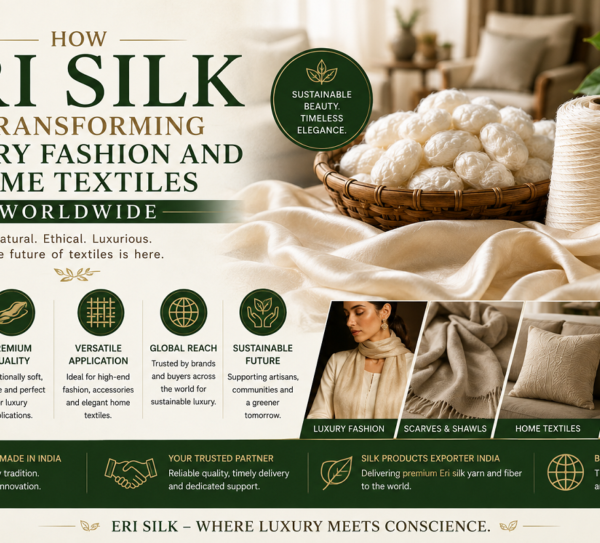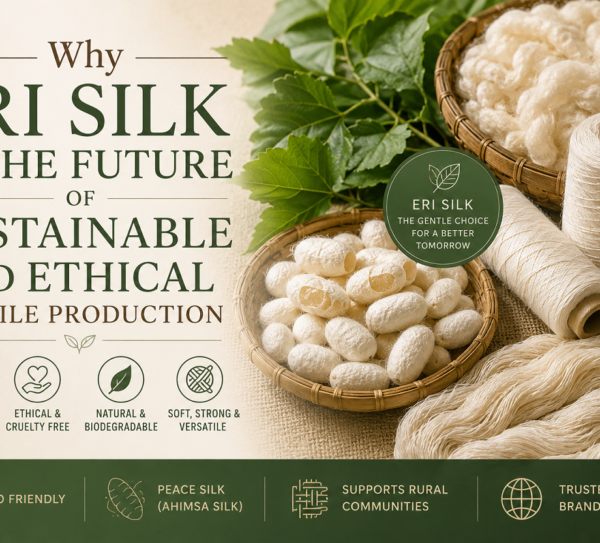


Global textile sourcing is changing. Buyers are no longer evaluating materials only on appearance and price; fiber origin, performance, versatility, responsible production, and suitability for premium applications have become increasingly important considerations. This shift is creating new opportunities for distinctive natural fibers, and Eri silk is gaining particular attention.
Produced predominantly in India, Eri silk has a noticeably different character from conventional filament silk. Its soft touch, subtle appearance, insulating properties, and spun-fiber structure make it suitable for manufacturers seeking natural materials with a premium yet understated identity.
India’s long-established sericulture knowledge and textile-processing capabilities further support this opportunity. By working with a reliable Silk Products Exporter India, international buyers can explore Eri silk for fashion, weaving, knitting, furnishing, handcrafted textiles, and specialized product development.
What Gives Eri Silk Its Premium Character?
Premium fibers are not defined by shine alone. Increasingly, luxury textile manufacturers value materials that provide distinctive texture, comfort, durability, and a recognizable natural character.
Eri Silk Yarn has a soft, slightly wool-like handle and generally displays a more subdued surface than highly lustrous filament silk. This makes it especially interesting for designers who want sophistication without an excessively glossy appearance.
Its tactile qualities can contribute to the character of a finished fabric, particularly in garments, scarves, wraps, knitwear, and handwoven textiles. Depending on yarn construction and finishing, Eri silk can be developed for different weights and textures, giving textile manufacturers considerable creative flexibility.
A Natural Fiber with a Distinctive Structure
Understanding the raw material is important for buyers evaluating Eri silk for commercial applications.
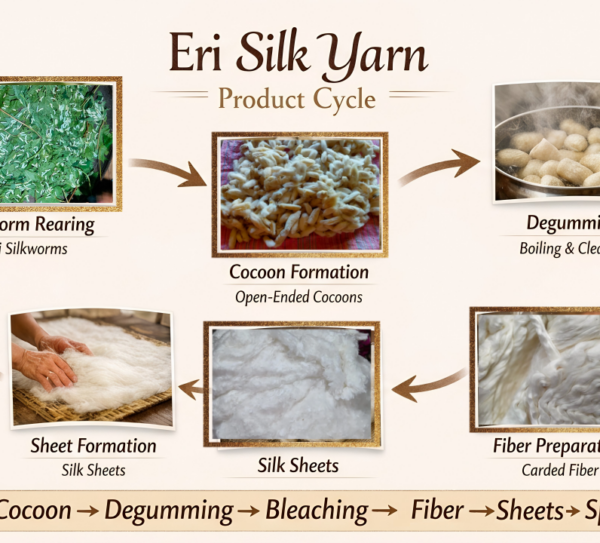
Unlike silk that is primarily reeled as continuous filament, Eri Silk Fiber is generally processed as staple fiber and subsequently spun. This characteristic influences the appearance and feel of the resulting yarn.
Spinning provides manufacturers with opportunities to adjust yarn characteristics according to the intended textile. Fiber preparation, yarn count, twist, blending, dyeing, and finishing can all influence the final result.
This makes Eri silk particularly attractive to product developers who want to create textiles with an identifiable natural texture instead of a highly uniform synthetic appearance.
Why International Buyers Are Looking Beyond Conventional Fibers
Textile buyers today operate in a market where product differentiation is increasingly difficult. Similar fabrics and designs can quickly appear across different brands, making the choice of raw material an important way to establish a unique identity.
Natural specialty fibers can help manufacturers differentiate their collections through texture, origin, craftsmanship, and performance.
Eri silk fits naturally into this strategy. Its combination of silk heritage and distinctive spun texture gives manufacturers a material that can be positioned differently from conventional silk.
For premium brands, the material itself can become part of the product story. Instead of simply describing an item as a silk garment or furnishing, manufacturers can communicate the specific characteristics of the fiber and the craftsmanship involved in transforming it into a finished textile.
Comfort is Becoming Part of Premium Textile Design
Modern luxury increasingly prioritizes how a textile feels during actual use.
Consumers expect premium garments to provide comfort alongside appearance. Home textiles must similarly deliver tactile qualities that make living spaces feel inviting.
Eri silk performs particularly well in this context because of its soft feel and natural insulating character. It can provide warmth while retaining the breathability expected from a natural fiber.
This creates opportunities for its use in products such as scarves, shawls, jackets, wraps, selected knitwear, throws, cushions, and decorative furnishing textiles.
Rather than being limited to ceremonial or highly formal silk applications, Eri silk can therefore participate in a broader interpretation of everyday premium textiles.
The Importance of Eri Silk Spinning Fiber for Manufacturers
Before yarn can become fabric, careful fiber preparation is required. Eri Silk Spinning Fiber provides the foundation for manufacturers to develop yarn according to specific textile requirements.
Consistency during fiber preparation influences subsequent spinning performance and the appearance of the finished yarn. Manufacturers may consider characteristics such as cleanliness, fiber length, preparation quality, intended yarn count, and end application when sourcing raw materials.
This stage is particularly relevant for international spinning mills and textile developers that want greater control over their own yarn production.
Instead of purchasing only finished textiles, buyers can source appropriate fiber forms and develop customized yarns according to their manufacturing processes.
Opportunities for Fiber Blending
Another factor increasing Eri silk’s commercial potential is its suitability for textile experimentation.
Depending on product requirements, silk fibers can be explored alongside other compatible natural fibers to develop different combinations of softness, warmth, texture, strength, drape, and cost.
Blended yarn development can open new applications that might not be practical using a single fiber alone.
For example, manufacturers developing premium apparel may seek a lightweight blend with an elegant handle, while home textile producers may prioritize texture and durability. Knitwear developers may focus more heavily on warmth and softness.
This ability to experiment gives Eri silk relevance not only as a heritage material but also as a fiber for modern textile research and product development.
Natural Eri Silk Fiber in Contemporary Design
The growing popularity of materials with authentic texture has created new opportunities for Natural Eri Silk Fiber.
For many years, textile manufacturing often pursued extreme uniformity. Contemporary design has broadened that approach. Designers increasingly appreciate subtle variations and natural surface characteristics because they can give products a more individual appearance.
Eri silk complements this aesthetic particularly well.
Its visual character can work with minimalist fashion, artisan collections, natural interiors, handcrafted accessories, and premium lifestyle products. Neutral and undyed appearances can emphasize the natural origin of the material, while dyeing allows manufacturers to adapt the fiber to modern color palettes.
The result is a material that can move comfortably between traditional craftsmanship and contemporary design.
What Global Buyers Should Consider When Sourcing Eri Silk
International sourcing requires more than selecting an attractive fiber. Buyers must determine whether the material matches their technical and commercial requirements.
Before placing larger orders, manufacturers may need to evaluate fiber or yarn specifications, consistency, quantity, lead times, dyeing requirements, packaging, and intended applications.
Sampling can be particularly valuable. A sample allows textile manufacturers to test the material under their own production conditions before moving into larger-scale manufacturing.
For yarn, buyers may examine spinning consistency, texture, strength, shade, and behavior during weaving or knitting. Fiber buyers may focus more closely on preparation, cleanliness, and suitability for their spinning systems.
Clear specifications between buyer and supplier help ensure that the selected Eri silk material performs as expected during subsequent manufacturing.
India’s Advantage in the Eri Silk Supply Chain
India has a distinctive advantage because Eri silk production is connected to established sericulture traditions, particularly in the northeastern region.
Knowledge surrounding silkworm rearing, cocoon handling, fiber preparation, spinning, weaving, and finishing has developed across generations. At the same time, improvements in processing, quality control, packaging, and export infrastructure are helping Indian suppliers respond to the requirements of modern international buyers.
This combination of traditional knowledge and commercial textile capability is difficult to replicate quickly.
For global manufacturers, sourcing from India therefore provides access not simply to a raw material but to an established ecosystem surrounding Eri silk.
From Specialty Fiber to International Textile Material
Eri silk was historically closely connected with regional textile traditions. Global sourcing is now expanding the possibilities for the fiber.
An Eri Silk Fiber Exporter can connect manufacturers outside India with raw and processed materials for further product development. This allows Eri silk to enter international spinning, weaving, knitting, fashion, interior, and craft supply chains.
Its potential applications extend across premium garments, accessories, handloom textiles, furnishing materials, yarn collections, and specialized natural-fiber products.
The opportunity is particularly strong for manufacturers that do not want Eri silk simply because it is different. Instead, they can select it because its specific characteristics contribute meaningfully to the intended product.
Quality and Consistency Remain Essential for Global Buyers
As international interest grows, consistent quality will remain one of the most important factors determining the long-term commercial success of Eri silk.
Global buyers typically require repeatability across orders. A material may have strong natural appeal, but it must also work reliably within established manufacturing processes.
Quality management can include careful raw-material selection, fiber preparation, spinning control, inspection, appropriate storage, and export packaging.
For suppliers, understanding the buyer’s intended application is equally important. Yarn developed for weaving may have different requirements from material intended for knitting, handcrafting, or specialized textile production.
A supplier capable of discussing these requirements can provide greater value than one focused only on selling a standard product.
Why Eri Silk Has Long-Term Potential
The interest surrounding Eri silk reflects several broader changes in global textiles.
Manufacturers want natural materials with recognizable identities. Designers are experimenting with texture and understated luxury. Buyers are paying closer attention to sourcing and material origin. Consumers increasingly appreciate products that combine comfort, craftsmanship, and thoughtful material selection.
Eri silk sits at the intersection of these trends.
It offers heritage without being restricted to traditional design, premium qualities without depending entirely on high shine, and versatility that allows manufacturers to explore different textile constructions.
For these reasons, its relevance is likely to extend well beyond a temporary fashion trend.
Conclusion
Eri silk is emerging as a premium natural fiber because it offers global textile buyers something increasingly valuable: distinction. Its soft texture, natural character, spinning versatility, comfort, and broad application potential allow manufacturers to create products that stand apart in crowded textile markets.
India’s established expertise in Eri silk production further strengthens its international potential. From prepared fibers and yarns to materials intended for specialized textile development, a dependable Silk Products Exporter India can help buyers identify suitable silk solutions for their production requirements. By combining India’s silk heritage with the evolving needs of international textile manufacturers, Nisha Silk Exports contributes to bringing distinctive Indian silk materials to buyers seeking quality, versatility, and premium natural-fiber possibilities.