

The global textile industry is undergoing a major transformation as consumers and brands shift toward sustainability and ethical sourcing. Natural fibers that minimize environmental impact while maintaining quality are becoming increasingly important. In this evolving landscape, India continues to lead with its rich heritage and innovation in silk production. A Silk Products Exporter India plays a vital role in delivering premium silk materials that meet both traditional and modern expectations.
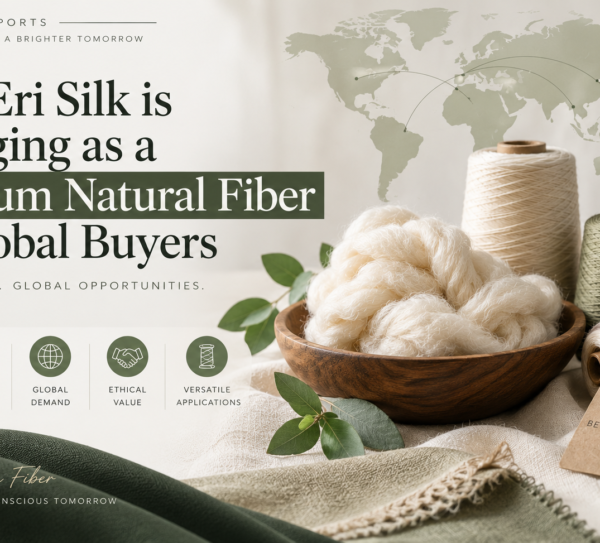
Among the various silk types available today, Eri silk has emerged as one of the most promising fibers. Known for its eco-friendly production and unique characteristics, Eri silk is gaining global recognition as a sustainable alternative to conventional silk.
Understanding Eri Silk Yarn and Its Unique Appeal
Eri Silk Yarn is widely appreciated for its soft texture, matte finish, and durability. Unlike traditional silk, which is often glossy, Eri silk offers a more natural look and feel, making it suitable for contemporary textile applications.
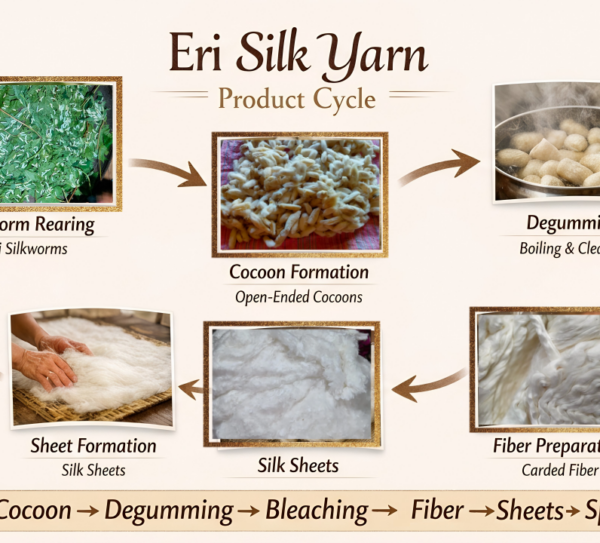
This yarn is produced through a spinning process rather than reeling, which gives it a slightly wool-like texture. Because of this, it is comfortable, breathable, and suitable for all seasons. The growing demand for natural and eco-conscious materials has positioned Eri silk as a preferred choice among designers and manufacturers worldwide.
Eri Silk Fiber: A Sustainable Natural Resource
The foundation of this yarn lies in Eri Silk Fiber, which is known for its strength and versatility. It is considered a natural protein fiber, offering excellent thermal properties and comfort.
One of the most significant advantages of this fiber is its environmentally friendly production. It is often referred to as a sustainable silk fiber because it requires minimal chemical processing and is completely biodegradable. This makes it an ideal choice for brands that prioritize eco-conscious manufacturing practices.
Peace Silk Yarn and the Ethics Behind Eri Silk
Eri silk is commonly known as Peace Silk Yarn because of the humane method used in its production. Unlike conventional silk, where the silkworm is not allowed to emerge, Eri silk ensures that the lifecycle of the silkworm is completed naturally.
This ethical approach has also led to the term Ahimsa Silk Yarn, reflecting the non-violent philosophy behind its production. As consumers become more aware of ethical sourcing, such fibers are gaining immense popularity across global markets.
Eri Silk Spinning Fiber and Traditional Craftsmanship
The process of converting raw silk into yarn involves the use of Eri Silk Spinning Fiber, which is carefully processed and spun into threads. This stage highlights the craftsmanship involved in Eri silk production.
Traditional spinning techniques, combined with modern improvements, ensure that the yarn retains its natural qualities while achieving consistency in texture and strength. This balance between tradition and innovation is one of the key reasons behind the growing demand for Eri silk products.
Organic Production and Responsible Supply Chains
With increasing demand for organic textiles, the role of an Organic Eri Silk Yarn Supplier India has become more important than ever. Organic production methods ensure that the entire process—from farming to fiber extraction—is carried out without harmful chemicals.
This not only protects the environment but also enhances the quality of the final product. Organic Eri silk is softer, more durable, and better suited for sensitive skin, making it highly desirable in premium textile markets.
Eri Silk Fiber Exporter and Global Market Demand
India has become a leading Eri Silk Fiber Exporter, supplying high-quality silk materials to international markets. The demand for sustainable textiles has created new opportunities for exporters to expand their reach globally.
From Europe to North America and Asia, textile manufacturers are increasingly sourcing Eri silk due to its eco-friendly properties and versatility. Exporters play a crucial role in maintaining quality standards and ensuring timely delivery to global buyers.
Vegan Silk Fiber: Meeting Modern Consumer Expectations
Eri silk is often associated with Vegan Silk Fiber, as it aligns with the values of consumers who prefer cruelty-free products. While technically derived from silkworms, the process does not harm them, making it acceptable in many ethical and vegan-conscious markets.
This positioning has helped Eri silk gain popularity among sustainable fashion brands that aim to reduce their environmental and ethical footprint.
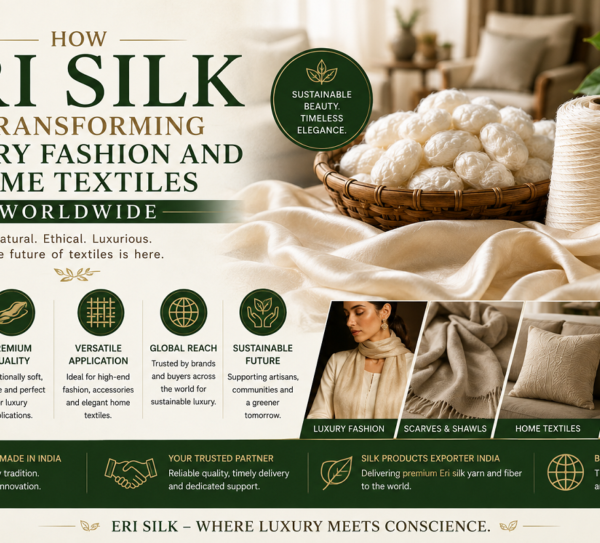
Eco Friendly Silk Yarn in Modern Textile Applications
As sustainability becomes a central focus, Eco Friendly Silk Yarn is gaining importance across industries. Eri silk fits perfectly into this category due to its low environmental impact and renewable nature.
Designers and manufacturers are using Eri silk in a variety of applications, including:
- Sustainable fashion garments
- Knitwear and winter textiles
- Upholstery and home décor
- Artisan and handcrafted products
Its versatility and comfort make it suitable for both luxury and everyday use.
Natural Eri Silk Tops and Fiber Processing
An important stage in Eri silk production involves the preparation of Natural Eri Silk Tops, which are used for spinning yarn. These fiber tops are carefully processed to maintain softness and uniformity.
They are widely used by textile manufacturers who require high-quality raw materials for producing yarn and fabric. This stage highlights the importance of proper fiber handling and preparation in ensuring the final product’s quality.
India’s Role in the Future of Sustainable Silk
India continues to strengthen its position as a global leader in sustainable silk production. With a strong network of farmers, artisans, and exporters, the country is well-equipped to meet the growing demand for eco-friendly textiles.
A Silk Products Exporter India plays a key role in bridging the gap between traditional silk production and modern global markets. By focusing on quality, sustainability, and ethical practices, exporters are helping shape the future of the textile industry.
Conclusion: Eri Silk as the Future of Ethical Textiles
Eri silk represents a perfect combination of sustainability, ethics, and functionality. From its natural production process to its versatile applications, it offers a unique alternative to conventional textiles.
As global demand for materials like eco friendly silk yarn and sustainable silk fiber continues to grow, Eri silk is set to become one of the most important fibers in the textile industry.
With its commitment to quality and responsible production, Nisha Silk Exports continues to support the growth of India’s silk industry while delivering premium silk products to international markets.